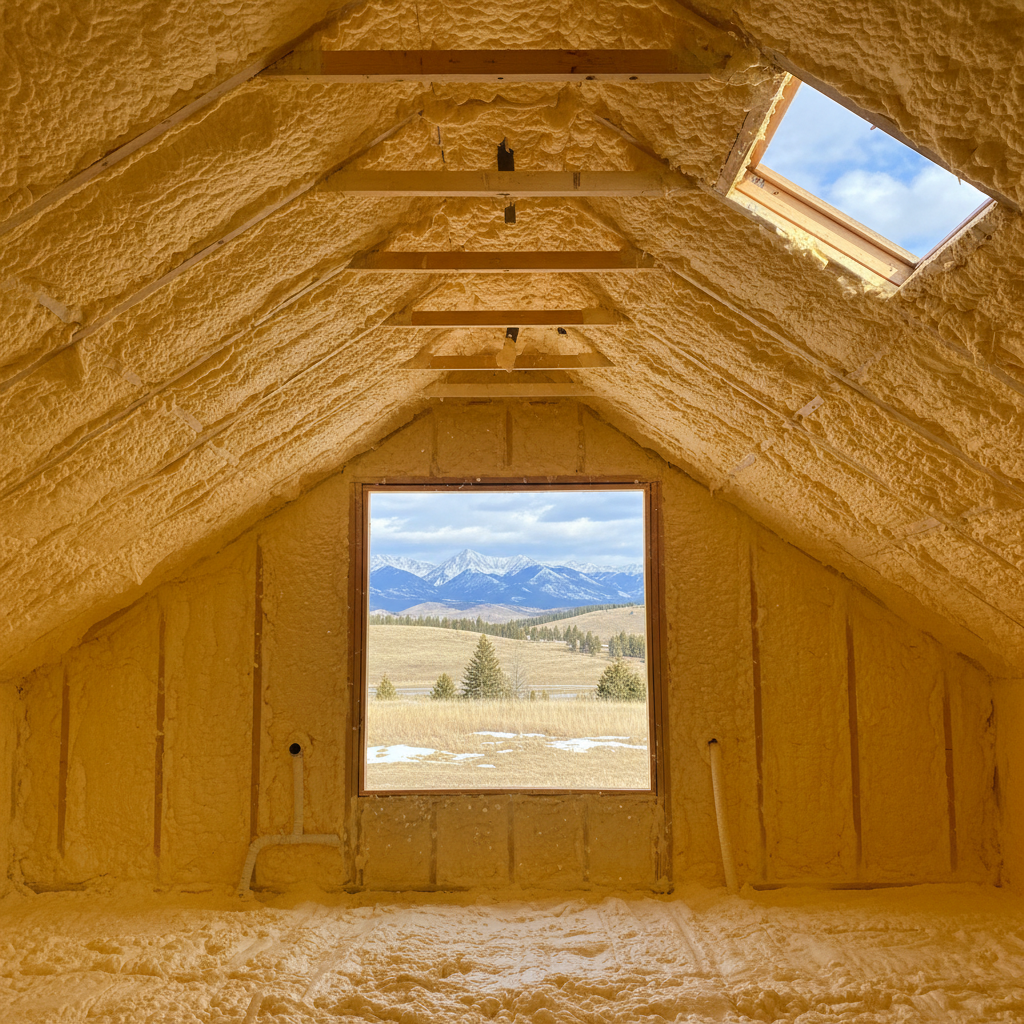
When to Install Closed-Cell Spray Foam? Timing's Everything.
Putting closed-cell spray foam in your home is a smart move for any Belgrade homeowner, especially with our wild temperature swings. But you can't just call us up and expect it to happen tomorrow, can you? Not if you want the best results, anyway. There's a sweet spot for scheduling this kind of work, and honestly, it mostly comes down to the weather.
The perfect time to get closed-cell spray foam done is when the outside sheathing and framing are totally dry, and the temperatures are just right. What do we mean by "just right" here in Montana? Think late spring, summer, or early fall. We're looking for daytime highs consistently above 40-50 degrees Fahrenheit, and ideally, not scorching hot either. If it's too cold, the chemicals don't react properly, and you won't get the right expansion or density. Too hot, and the foam can cure too fast, which can cause problems later on. We really need that Goldilocks zone.
A lot of folks figure winter's a good time because they're already thinking about those heating bills. And sure, you'll save money, but installing closed-cell foam when it's freezing outside? That's tricky. We *can* do it, but it often means we have to heat the building a lot beforehand, which adds to both the cost and the time. Usually, it's just more efficient and cheaper to plan ahead for those shoulder seasons or summer.
How Weather Conditions Affect Our Work
Beyond just temperature, other weather conditions really impact how we apply closed-cell spray foam. Humidity, for example, is one factor. While closed-cell foam makes a fantastic vapor barrier once it's cured, high humidity during application can sometimes mess with the initial adhesion or how long it takes to cure. We're always keeping an eye on the conditions inside and outside your home to make sure everything's just right.
Wind's another big one. If we're working on an exposed area—like a crawl space or an attic with open gables before the roof is fully sealed—strong winds can make an even application really tough. It can also carry overspray to places we don't want it. We're pretty good at setting up containment, but Mother Nature always has the final say. That's why sometimes we might have to reschedule if a big wind advisory rolls through. Just can't fight it.
Rain and snow are obvious no-gos. We simply can't spray foam onto wet surfaces. The framing and sheathing need to be bone dry. If we get a week of heavy rain, like we sometimes do in the spring, it can definitely push schedules back. It all comes down to making sure the conditions are perfect for a long-lasting, effective seal.
Protecting Your Closed-Cell Investment All Year
Once your closed-cell spray foam is in, you've made a really solid investment in your home's comfort and energy efficiency. It's tough stuff, no doubt, but there are still a few things you can do to make sure it keeps performing its best for decades.
- Don't Disturb It: Closed-cell foam is rigid, yes, but it's not meant to be a structural element you can lean heavy things against or constantly bump into. If you've got it in a crawl space or basement, just be mindful when you're moving stuff around.
- Keep it Covered: If your closed-cell foam is in an area that's going to see sunlight—like an attic that's not fully enclosed yet, or if it's in a living space—it needs to be covered. Sunlight can degrade the foam over time. Plus, building codes often require an ignition barrier or thermal barrier over spray foam in occupied spaces. We'll always tell you what's needed for your specific situation.
- Watch for Leaks: While the foam itself won't let water through, any persistent leaks from plumbing or roof issues can still cause problems for the surrounding wood or other materials. If you notice a leak, get it fixed right away. Closed-cell foam won't absorb water, but the leak source still needs addressing.
- Pest Control: Rodents and insects generally aren't interested in closed-cell spray foam. Why? Because it offers no food value and it's too dense for them to tunnel through easily. However, if you have a serious pest problem, they can sometimes chew through anything to get where they want to go. Keeping up with general pest control around your home is always a good idea, especially in areas like the Belgrade West neighborhood where you might have more open land nearby.
At Alpha Insulation Company, we stand by our work and want you to get the most out of your insulation. If you ever have questions or concerns about your closed-cell spray foam, just give us a call. We're here to help you keep your home comfortable and efficient for years to come.